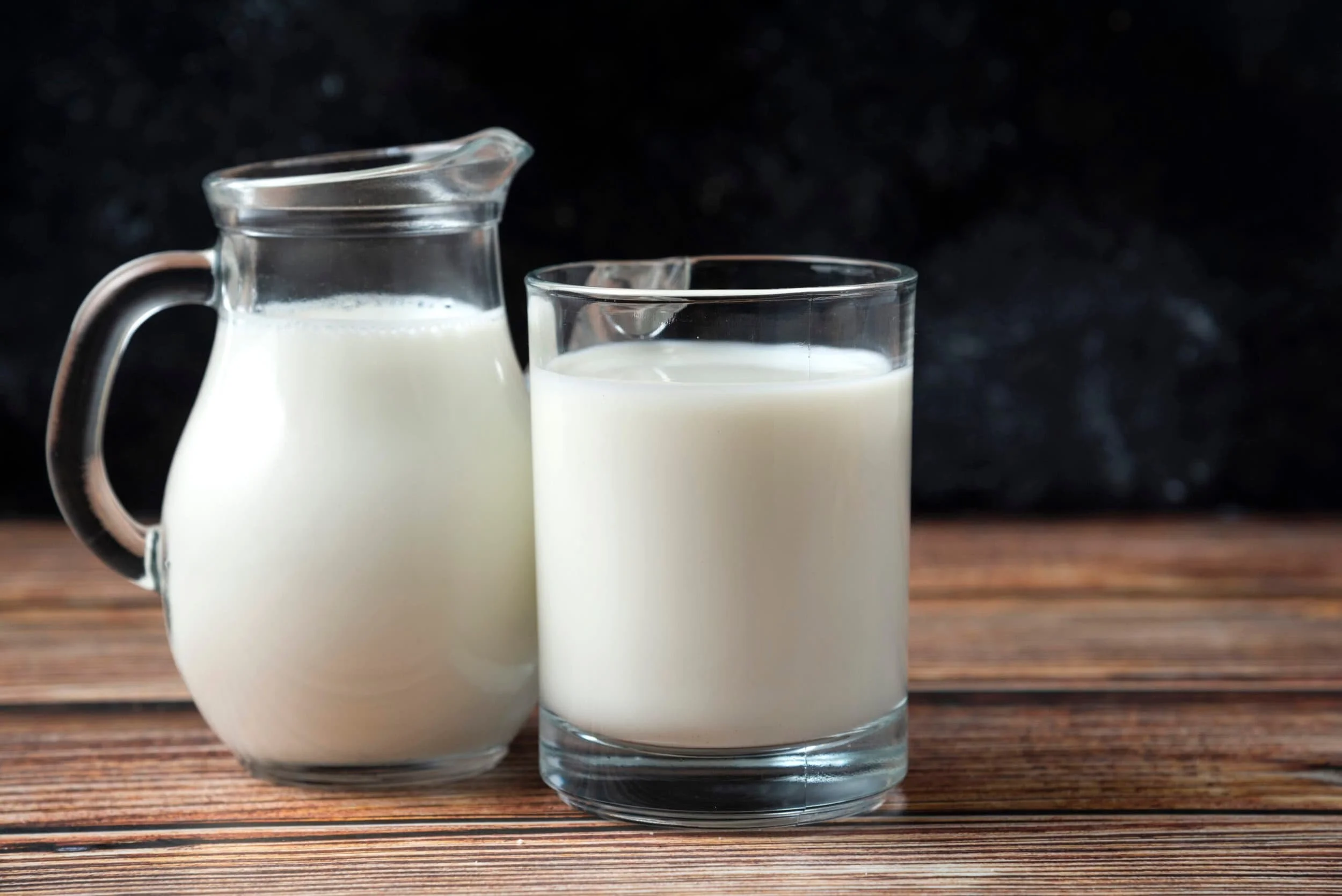
Is Almond Milk Dairy? Comparing Almond Milk to Real Milk
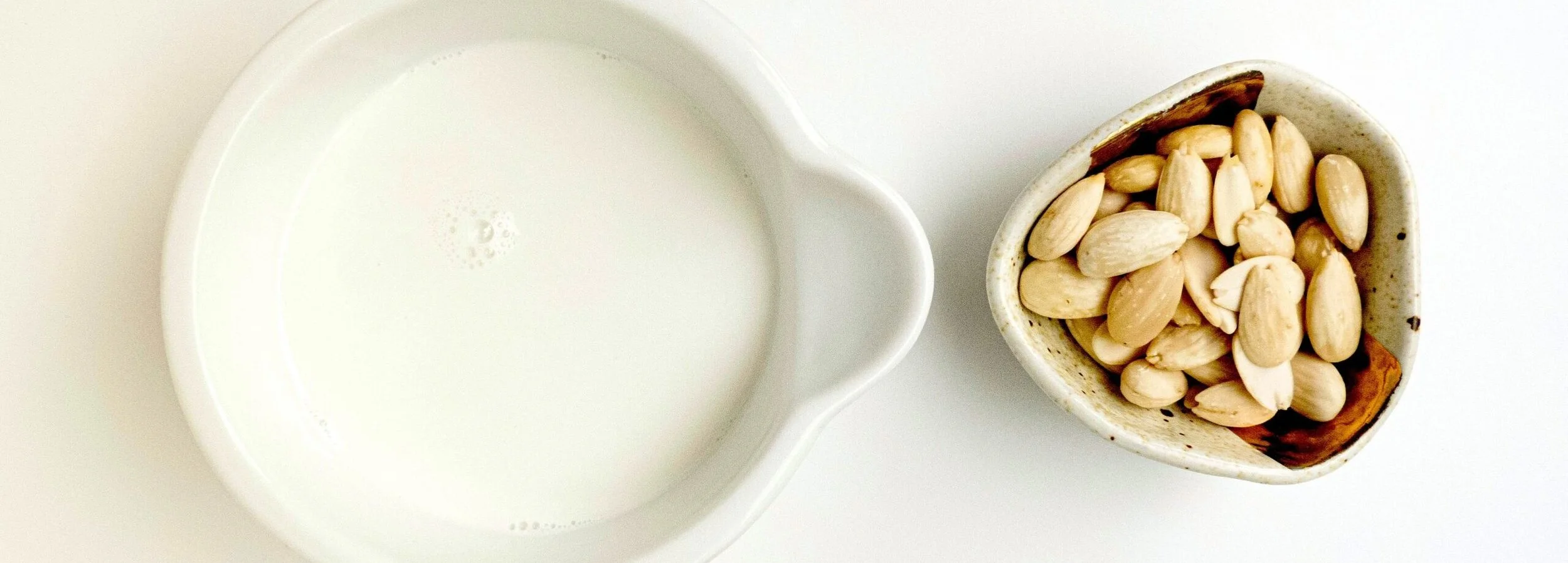
“Is almond milk dairy?” is a very common question among people looking for plant-based alternatives to dairy. A quick search online shows that a half-gallon of almond milk is about 1.5 times more expensive than a half-gallon of milk (and still more than a gallon of milk), so what is the appeal of almond milk, and how does it compare to real dairy milk?
Does almond milk have dairy?
No, almond milk does not have dairy.
Key Takeaways
Almond milk is a plant-based beverage made from almonds and water, while real milk is dairy from cows that naturally provides protein, calcium, and other key nutrients.
Real milk has about 8 grams of high-quality protein per 8-ounce serving, which is roughly eight times more than many almond milks, and it also offers more naturally occurring nutrients.
Almond milk often contains very few actual almonds, added sugars, and added vitamins and minerals, while real milk is minimally processed and typically more nutrient-dense and affordable per serving.
Is Almond Milk Dairy? Is Almond Milk Really Milk?
No, almond milk or almond “milk” is not really milk, and it is not dairy; it is a plant-based substitute for real dairy. The Oxford dictionary defines milk as: “an opaque white fluid rich in fat and protein, secreted by female mammals for the nourishment of their young.”
Almond milk is not real dairy, but the word "milk" is used loosely to indicate that it is the almond version of an “opaque white fluid.”
At one time, almond milk was the choice alternative beverage for its creamy texture and slightly nutty flavor. To turn almonds into “milk,” the nuts are generally ground, combined with water, and filtered. Almond production has greatly increased in recent years due to increasing demand amongst those seeking alternatives to real milk.
However, those consumers seeking sustainable foods are realizing the downside of almond milk. The downside of almond milk when it comes to sustainability is simple: almonds require a lot of water. Almond milk requires more water than any other dairy alternative: It takes 130 pints of water to produce a single glass of almond milk. It should be noted that almond growers are designing better practices like irrigation systems to improve water use, but the rise in popularity of the food is not helping its image in sustainability efforts yet.
Almond Milk: Vitamin B12 Powerhouse
Usually, almond milk has about 1/8 the protein of a glass of cow milk but is high in certain vitamins, such as B12. Some almond milks have 25% of the DV of B12.
Nutritionally, it’s a little more complicated. Though it could be argued that almonds themselves are worth the extra water due to their nutrient-dense qualities, turning the nuts into a milk alternative reduces most of the nutrient package that water helped create. Further, people may choose almond milk over real milk or its alternatives because they believe it has a high number of almonds in the carton. However, depending on the brand, almond milk may contain as little as two percent almonds. With so few almonds in each carton, you’d get very few nutrients even if they were kept intact.
And this shows. Real milk provides 8 grams of high-quality protein in every 8-ounce glass, about 8 times more than a serving of almond milk. (One ounce of almonds—not almond milk—provides about 6 grams of protein.)
Why is there a difference between almond nutrition and almond milk? Almond milk is also fortified with riboflavin, vitamin D, and calcium, 2 of which are already found in almonds. (Almonds contain naturally occurring riboflavin, calcium, vitamin E, monounsaturated fats, fiber, biotin, phosphorus, and magnesium.) Almond milk is fortified because many of the almonds’ nutrients are lost in the process of making milk.
Real milk naturally contains the above-mentioned protein as well as calcium, potassium, riboflavin, phosphorus, vitamin B12, and niacin. It is also fortified with vitamin A and vitamin D. In many almond milk brands, there is added sugar, as well as possible additives like lecithin and calcium carbonate, while real milk has no added sugar unless flavored and naturally includes a sugar called lactose.
Though almonds are comparable to other alternative "milks" in their greenhouse gas emissions or land use, they gulp up water. For a product that uses so little of the nut it is named after—a more realistic name would be water with a hint of almond—there is little excuse for its sustainability record. If consumers want the benefits of almonds, eating almonds in moderation is a better solution than almond milk nutritionally and environmentally. When choosing milk, skip the alternatives and reach for the real thing.
Q&A on Is Almond Milk Dairy?
Q: Is almond milk considered real milk?
A: No. Almond milk is a plant-based beverage. Real milk comes from cows and fits the true definition of milk as a nutrient-rich fluid from mammals.
Q: How does the protein in almond milk compare to real milk?
A: Real milk provides about 8 grams of high-quality protein in an 8-ounce glass, while many almond milks have around 1 gram; dairy milk has much higher protein.
Q: What are some key nutritional differences between almond milk and real milk?
A: Real milk naturally contains protein, calcium, potassium, vitamin B12, and riboflavin, and is fortified with vitamins A and D. Almond milk is lower in protein, often fortified to replace lost nutrients, and may include added sugars and stabilizers.
Real milk provides a greater list of benefits than almond milk. One of the original farm-to-table foods, milk is a minimally processed, local beverage. The almond alternative cannot compare.
Related Posts