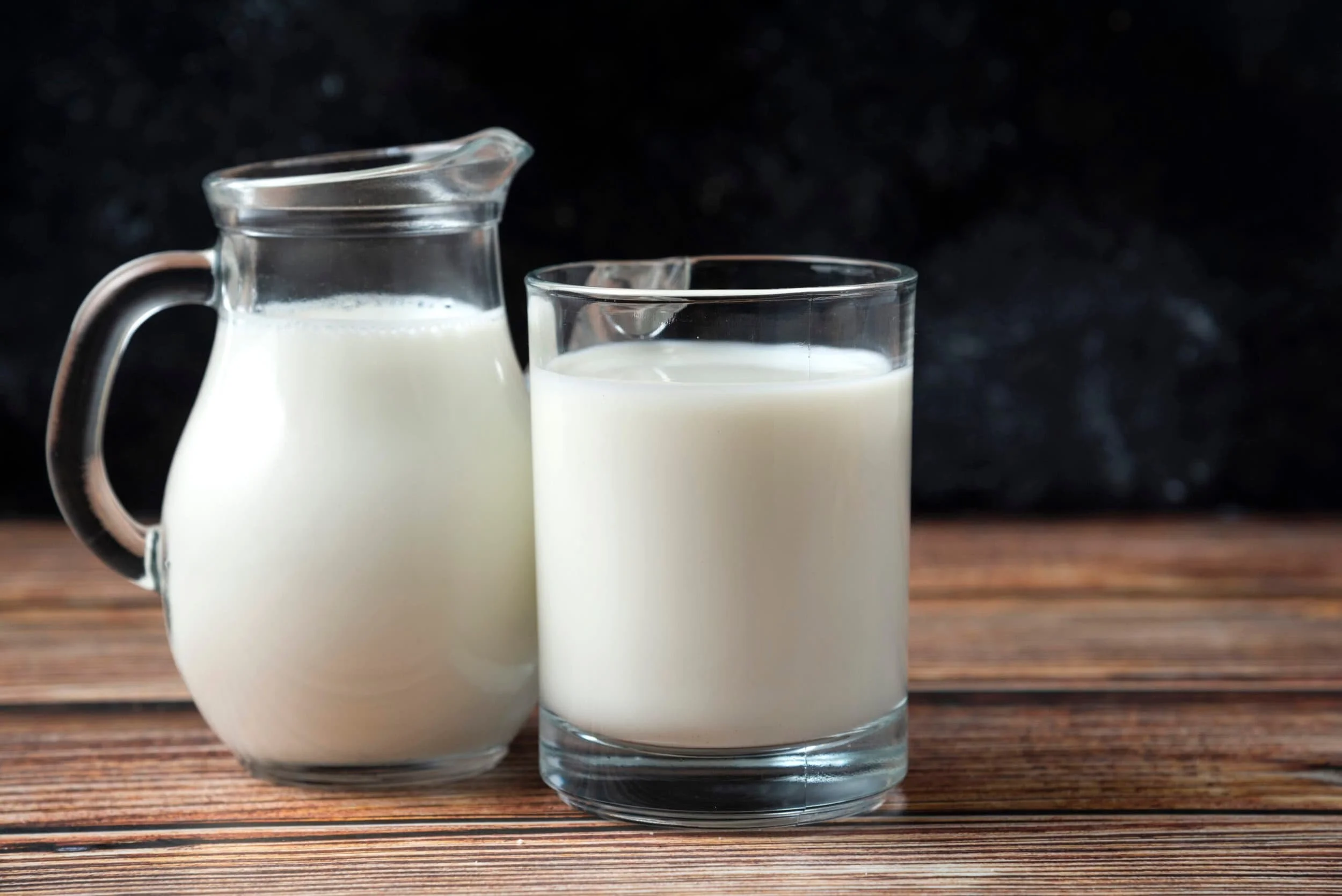
What is Homogenized and Non-homogenized Milk in Cows?

Most people do not know the differences between homogenized and non-homogenized milk, or, for that matter, what each one is. Let’s dive into the differences between the milk you buy at the store and what milk looks like straight from the cow.
Homogenized milk has its fat globules broken into tiny, evenly distributed particles so the cream does not separate and rise to the top.
Non-homogenized milk, often called cream-top milk, naturally separates, so the cream layer rises and needs to be shaken back in before drinking.
Homogenization changes texture and appearance, not the basic nutrition, so both homogenized and non-homogenized milk offer similar core nutrients.
What is Homogenized Milk?
Homogenized milk has been mechanically processed so the fat is evenly dispersed, creating a smooth texture with no visible cream layer on top.
The milk you purchase at the grocery store has a consistent texture, color, and creaminess, both in the jug and in every other milk jug. Commercial store-bought cow’s milk is homogenous or homogenized milk.
Milk is often homogenized to give milk its rich, smooth texture. Homogenization is a process that breaks up the fat globules in milk so that they stay evenly dispersed in the milk. The term “homogenized” is used in chemistry, describing the process of converting a mixture of two mutually non-soluble liquids into a uniform liquid throughout, and it’s the same with milk.
However, milk was not commonly homogenous in the United States even one hundred years ago.
What is Non-homogenized Milk and Why Does it Separate?
Non-homogenized milk is milk in its more natural state, so the fat is not broken up, and the cream rises to form a layer that you can stir or shake back in.
Until the 1920s, discovering a layer of cream at the top of milk was normal. Milk consists of the milk fat--cream--and the remaining milk. Without homogenization, the cream rises to the top as the rest of the milk settles.
Milkfat naturally rises to the surface, creating a top layer of cream. Begun in 1899, milk homogenization mixes the top layer of milkfat into the rest of the milk by breaking the milkfat into smaller particles. Essentially, the milk is shaken until the top layer is broken up into the milk and evenly dispersed. That’s it! Once shaken, the small milk fat particles stay mixed into the milk, resulting in a uniform texture.
The milk is agitated to break up the cream so that it is found evenly throughout the beverage. There are no chemicals involved in the process, and homogenization does not change the quality of milk. It simply makes drinking milk more convenient because you don’t have to shake up the bottle to distribute the cream before drinking.
Homogenized and Non-homogenized Milk
Today, this distinctive layer is identified as non-homogenized milk with another name: cream line. While still available, non-homogenized milk options declined with time as milk became more accessible in urban and suburban communities. When people drink non-homogenized milk, they either skim the layer of cream off the top or shake the milk to distribute the cream back into the milk, which are similar processes done to create homogenized milk.
Deciding if you will purchase non-homogenized milk is a matter of personal preference, not a matter of safety. Homogenized milk is the most readily available option on your shopping list, but you can buy non-homogenized or cream line milk—just check the label or visit a specialty farm store.
Is homogenized milk more nutritious than non-homogenized milk?
No. Homogenization does not significantly change the base nutrients; the main differences are in texture, appearance, and how the cream behaves.
For more information about homogenization and other processes, visit our Milk Safety page.
Related Posts