Why Do Dairy Cows Eat More Than Grass?

Even cows take advantage of nice weather, and that often sees them happily munching on grass. Depending on the dairy farm, American dairy cows may spend time outside. As the weather warms, you’ll find cows relaxing in a creek or grazing on convenient grass.
When spotting cows out for summer pasture, many people assume the cool grass the cow lies on and chews gives a cow everything she needs, but there’s often more to a dairy cow’s diet than what can be found in a grassy field.
Key Takeaways
Dairy cows eat more than grass because they need a balanced diet, called a Total Mixed Ration, to meet their high energy and nutrient needs for milk production, growth, and overall health.
Most of a dairy cow’s diet is still forage like grass, corn plants, and alfalfa hay, but farmers also add grains and nutritious byproducts so cows get enough energy, protein, vitamins, and minerals.
Dairy nutritionists and veterinarians help farmers adjust each herd’s diet based on age, stage of lactation, and weather, so cows stay comfortable, productive, and healthy year-round.
What Do Dairy Cows Eat? The Delicious Diet of Dairy Cows
Like people, cows have nutritional needs that are met through a variety of foods. Also like people, cows need professionals to adapt their diets throughout the year, as well as on factors like age, weight, and milking or dry, to remain healthy, happy cows. While grass-fed cows are healthy, personalized diets help cows get the benefits best for them. To provide cows their specific nutritional requirements, dairy farmers feed cows a mix of feed they call Total Mixed Ration (TMR). Think of what comprises TMR as a cow’s version of the 5 food groups humans strive for each day. But what are their portions?
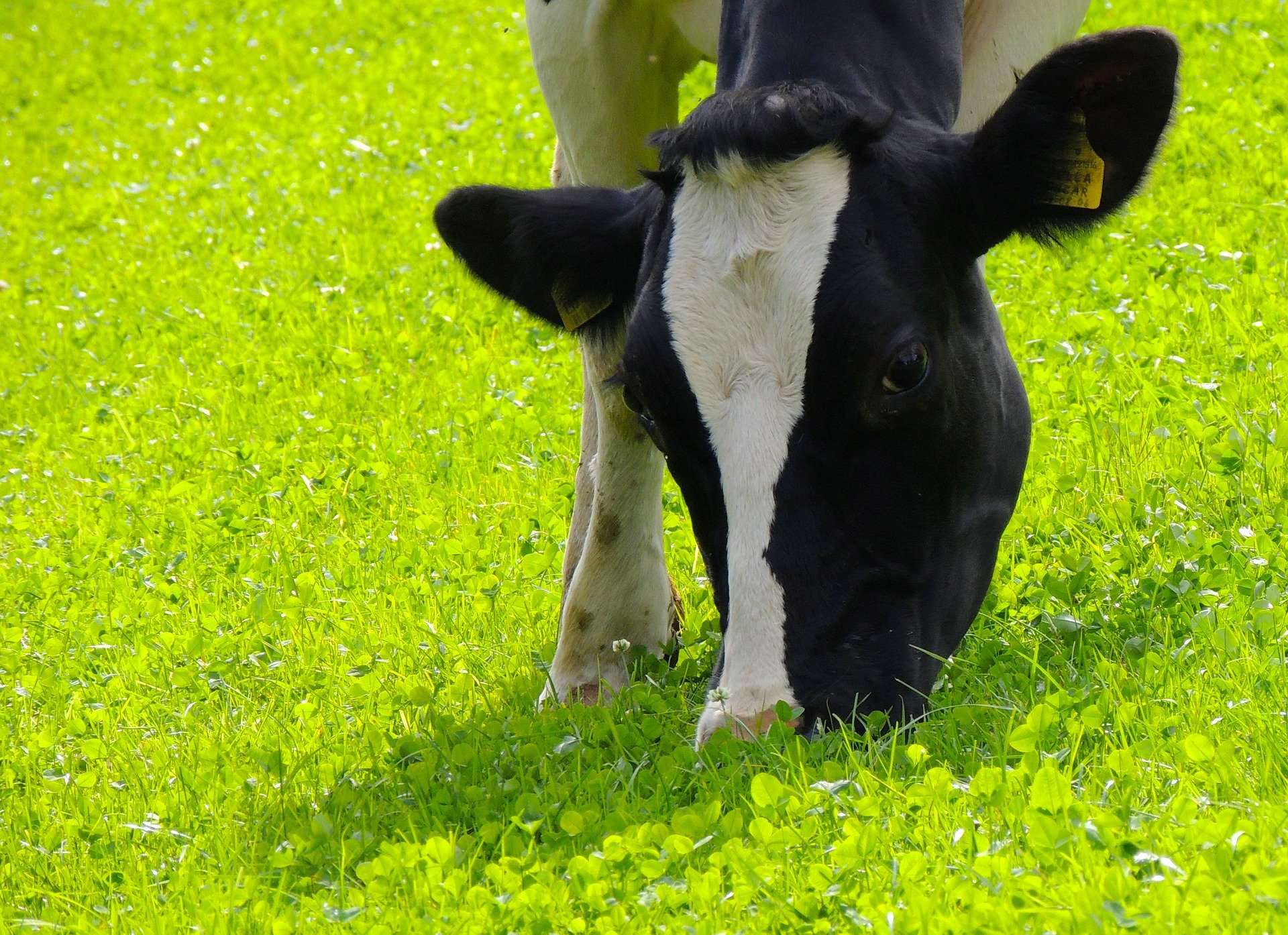
Most of a dairy cow’s diet (over 50%) is comprised of grass. This part of the diet consists largely of corn and its leaves and/or chopped alfalfa and its hay. Hay and silage sound similar enough to what a grazing cow may find, but cows also enjoy grain (under 25%), both grown specifically for them on the farm and from grain byproducts of other industries.
And the remaining part of a cow’s diet? Additional byproducts like orange pulp, almond hulls, and more are also used, so don’t be surprised if you recognize some ingredients mixed in with the grain and pellets. With their four-chambered stomachs, cows can break down products humans cannot and use the energy and nutrients in these products that would otherwise go to waste. This energy is important for pregnant or milking cows, especially as the temperatures rise.
What Do Dairy Cows Need in Their Diet to Thrive?
Cows need salt, vitamins, and minerals in their feed. While this can be found in the ingredients of their TMR already listed, they may need more. These substances play important roles in a cow’s health. While you may see cows enjoying a salt lick, a supplement can also be added to the cow’s TMR to provide necessary levels of vitamins, salt, and minerals like phosphorus, sodium, and chlorine that are the most likely to be lower while cows enjoy the summer pasture.
While cows can survive on the levels of nutrients available in a pasture, they may not be receiving what they need to reach maximum milk production through grass alone. Working with a nutritionist, veterinarian, or other professional, dairy farmers can create a diet that will promote a cow’s well-being when a day in the pasture isn’t enough.
FAQs About Dairy Cows and Their Diet
Q: Why do dairy cows need more than just grass in their diet?
A: Dairy cows need extra energy, protein, vitamins, and minerals that grass alone cannot always provide, especially when they are producing milk, so farmers feed a mix of forages, grains, and supplements.
Q: What is a Total Mixed Ration (TMR) for dairy cows?
A: A Total Mixed Ration is a carefully blended “all-in-one” feed that includes forages like hay or silage, grains, byproducts, and supplements, so every bite gives the cow a balanced mix of nutrients.
Q: Is grass still an important part of a dairy cow’s diet?
A: Yes, grass and other forages usually make up more than half of a dairy cow’s diet, providing fiber that supports healthy digestion in the cow’s four-chambered stomach.
Q: Why do farmers use byproducts like orange pulp or almond hulls in cow feed?
A: Farmers use safe agricultural byproducts because cows can digest parts of plants that people cannot, turning them into milk, which reduces food waste and provides extra energy and fiber.
Q: Who helps dairy farmers decide what to feed their cows?
A: Dairy farmers often work with animal nutritionists and veterinarians to design and adjust rations so each group of cows gets the right balance of nutrients for their age, size, and milk production.
The Dairy Alliance
Here at The Dairy Alliance, our priority is the health and welfare of our amazing dairy cows. And hard-working dairy farmers. Quality control and the safety of all milk produced are also top priorities.
For more information on dairy cows, dairy farms, professional resources, recipes, and more, visit our online resources and blog.
Related Posts